Buy 遥か.com ?
We are moving the project
遥か.com .
Are you interested in purchasing the domain
遥か.com ?
domain@kv-gmbh.de · 0541-91531010
Buy 遥か.com ?
How far is the distance between planets and stars?
The distance between planets and stars can vary greatly. For example, the distance between Earth and Mars can range from 54.6 million kilometers to 401 million kilometers, depending on their positions in their orbits. The distance between stars can be even more vast, with the closest star to our solar system, Proxima Centauri, being about 4.24 light years away, which is roughly 40 trillion kilometers. The distance between planets and stars can be measured in astronomical units (AU) for planets within our solar system, and in light years for stars outside of our solar system. **
What does life look like on distant planets?
Life on distant planets is largely unknown, as we have not yet discovered any definitive evidence of extraterrestrial life. However, scientists speculate that life on distant planets could vary greatly depending on factors such as the planet's distance from its star, composition of its atmosphere, and presence of water. It is possible that life on distant planets could exist in forms very different from what we are familiar with on Earth, making it a fascinating area of study for astrobiologists. **


Similar search terms for Planets
Top-Angebote
Products related to Planets:
-
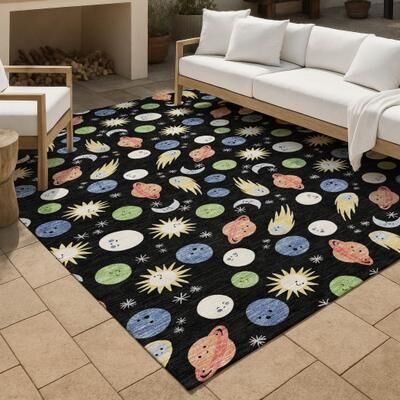
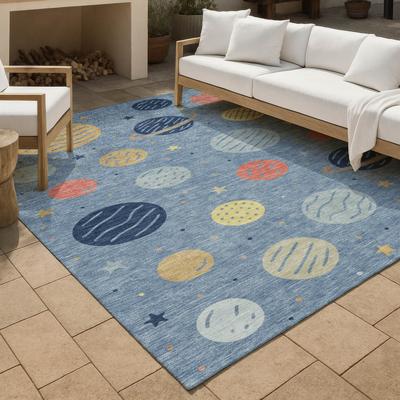
Addison Rugs Machine Washable Indoor/ Outdoor Planets Comets Chantille RugAdd a delightful touch to any transitional style with space motifs that ignite children's imaginations. Designed with an ultra-thin, flat weave, it fits effortlessly under doors, and boasts a non-skid backing that negates the need for an extra rug pad.37,99 $*Shipping: 0,00 $Secure redirect to the provider
-
Addison Rugs Machine Washable Indoor/ Outdoor Planets Comets Chantille RugAdd a delightful touch to any transitional style with space motifs that ignite children's imaginations. Designed with an ultra-thin, flat weave, it fits effortlessly under doors, and boasts a non-skid backing that negates the need for an extra rug pad.137,75 $*Shipping: 0,00 $Secure redirect to the provider


-
Why are the inner planets rocky planets and the outer planets gas planets?
The inner planets, Mercury, Venus, Earth, and Mars, are rocky planets because they formed closer to the sun where it was hotter. The intense heat caused lighter elements like hydrogen and helium to be blown away, leaving behind heavier elements like rock and metal. In contrast, the outer planets, Jupiter, Saturn, Uranus, and Neptune, are gas planets because they formed farther from the sun where it was cooler. This allowed lighter elements to remain in their atmospheres, creating their gas giant composition. **
-
Why are people searching for such distant Earth-like planets?
People are searching for distant Earth-like planets because they could potentially support life outside of our own planet. Finding a planet with similar conditions to Earth increases the possibility of finding extraterrestrial life or understanding more about the origins of life in the universe. Additionally, studying these planets can provide valuable insights into the potential habitability of other worlds and help us understand more about the diversity of planetary systems in the galaxy. Ultimately, the search for Earth-like planets is driven by our curiosity to explore and understand the universe beyond our own planet. **
-
Why are we searching for such distant Earth-like planets?
We are searching for distant Earth-like planets because they could potentially support life as we know it. Finding these planets would help us understand the conditions necessary for life to exist outside of our solar system. Studying these planets could also provide insights into the origins of life on Earth and the possibility of extraterrestrial life. Additionally, discovering Earth-like planets could expand our understanding of the universe and our place within it. **
-
Can one see or discover life on other distant planets?
As of now, there is no definitive evidence of life on other distant planets. However, with advancements in technology and space exploration, scientists are constantly searching for signs of life on other planets. The discovery of exoplanets in the habitable zone of their stars has raised hopes of finding extraterrestrial life. Future missions, such as the James Webb Space Telescope and the Mars Sample Return mission, may provide more insights into the potential for life on other distant planets. **

How large is the distance between the planets?
The distance between planets in our solar system varies greatly depending on their positions in their orbits. On average, the distance between Earth and Mars is about 225 million kilometers, while the distance between Earth and Venus is about 42 million kilometers. The distance between the outer planets, such as Jupiter and Saturn, can be hundreds of millions of kilometers. The vastness of space means that the distances between planets are truly immense, and it takes spacecraft many months or even years to travel between them. **
Why are gas planets so far from the sun?
Gas planets are so far from the sun because they formed in the outer regions of the solar system where the temperature was cooler and there was an abundance of lighter gases such as hydrogen and helium. These gases were able to condense and form massive gas giants like Jupiter and Saturn. In the outer regions of the solar system, the gravitational forces were weaker, allowing these planets to accumulate large amounts of gas and grow to their enormous sizes. Additionally, the presence of ice and other volatile materials in the outer solar system may have also contributed to the formation of gas planets in these distant regions. **
Top-Angebote
Products related to Planets:
-
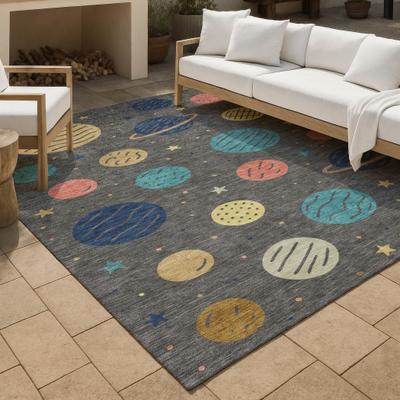
Addison Rugs Machine Washable Indoor/ Outdoor Planets Comets Chantille RugAdd a delightful touch to any transitional style with space motifs that ignite children's imaginations. Designed with an ultra-thin, flat weave, it fits effortlessly under doors, and boasts a non-skid backing that negates the need for an extra rug pad.37,99 $*Shipping: 0,00 $Secure redirect to the provider
-
Addison Rugs Machine Washable Indoor/ Outdoor Planets Comets Chantille RugAdd a delightful touch to any transitional style with space motifs that ignite children's imaginations. Designed with an ultra-thin, flat weave, it fits effortlessly under doors, and boasts a non-skid backing that negates the need for an extra rug pad.37,99 $*Shipping: 0,00 $Secure redirect to the provider
-
How far is the distance between planets and stars?
The distance between planets and stars can vary greatly. For example, the distance between Earth and Mars can range from 54.6 million kilometers to 401 million kilometers, depending on their positions in their orbits. The distance between stars can be even more vast, with the closest star to our solar system, Proxima Centauri, being about 4.24 light years away, which is roughly 40 trillion kilometers. The distance between planets and stars can be measured in astronomical units (AU) for planets within our solar system, and in light years for stars outside of our solar system. **
-
What does life look like on distant planets?
Life on distant planets is largely unknown, as we have not yet discovered any definitive evidence of extraterrestrial life. However, scientists speculate that life on distant planets could vary greatly depending on factors such as the planet's distance from its star, composition of its atmosphere, and presence of water. It is possible that life on distant planets could exist in forms very different from what we are familiar with on Earth, making it a fascinating area of study for astrobiologists. **
-
Why are the inner planets rocky planets and the outer planets gas planets?
The inner planets, Mercury, Venus, Earth, and Mars, are rocky planets because they formed closer to the sun where it was hotter. The intense heat caused lighter elements like hydrogen and helium to be blown away, leaving behind heavier elements like rock and metal. In contrast, the outer planets, Jupiter, Saturn, Uranus, and Neptune, are gas planets because they formed farther from the sun where it was cooler. This allowed lighter elements to remain in their atmospheres, creating their gas giant composition. **
-
Why are people searching for such distant Earth-like planets?
People are searching for distant Earth-like planets because they could potentially support life outside of our own planet. Finding a planet with similar conditions to Earth increases the possibility of finding extraterrestrial life or understanding more about the origins of life in the universe. Additionally, studying these planets can provide valuable insights into the potential habitability of other worlds and help us understand more about the diversity of planetary systems in the galaxy. Ultimately, the search for Earth-like planets is driven by our curiosity to explore and understand the universe beyond our own planet. **
Similar search terms for Planets
-
Addison Rugs Machine Washable Indoor/ Outdoor Planets Comets Chantille RugAdd a delightful touch to any transitional style with space motifs that ignite children's imaginations. Designed with an ultra-thin, flat weave, it fits effortlessly under doors, and boasts a non-skid backing that negates the need for an extra rug pad.137,75 $*Shipping: 0,00 $Secure redirect to the provider
-
Addison Rugs Machine Washable Indoor/ Outdoor Planets Comets Chantille RugAdd a delightful touch to any transitional style with space motifs that ignite children's imaginations. Designed with an ultra-thin, flat weave, it fits effortlessly under doors, and boasts a non-skid backing that negates the need for an extra rug pad.93,99 $*Shipping: 0,00 $Secure redirect to the provider
-
Why are we searching for such distant Earth-like planets?
We are searching for distant Earth-like planets because they could potentially support life as we know it. Finding these planets would help us understand the conditions necessary for life to exist outside of our solar system. Studying these planets could also provide insights into the origins of life on Earth and the possibility of extraterrestrial life. Additionally, discovering Earth-like planets could expand our understanding of the universe and our place within it. **
-
Can one see or discover life on other distant planets?
As of now, there is no definitive evidence of life on other distant planets. However, with advancements in technology and space exploration, scientists are constantly searching for signs of life on other planets. The discovery of exoplanets in the habitable zone of their stars has raised hopes of finding extraterrestrial life. Future missions, such as the James Webb Space Telescope and the Mars Sample Return mission, may provide more insights into the potential for life on other distant planets. **
-
How large is the distance between the planets?
The distance between planets in our solar system varies greatly depending on their positions in their orbits. On average, the distance between Earth and Mars is about 225 million kilometers, while the distance between Earth and Venus is about 42 million kilometers. The distance between the outer planets, such as Jupiter and Saturn, can be hundreds of millions of kilometers. The vastness of space means that the distances between planets are truly immense, and it takes spacecraft many months or even years to travel between them. **
-
Why are gas planets so far from the sun?
Gas planets are so far from the sun because they formed in the outer regions of the solar system where the temperature was cooler and there was an abundance of lighter gases such as hydrogen and helium. These gases were able to condense and form massive gas giants like Jupiter and Saturn. In the outer regions of the solar system, the gravitational forces were weaker, allowing these planets to accumulate large amounts of gas and grow to their enormous sizes. Additionally, the presence of ice and other volatile materials in the outer solar system may have also contributed to the formation of gas planets in these distant regions. **
* All prices are inclusive of VAT and, if applicable, plus shipping costs. The offer information is based on the details provided by the respective shop and is updated through automated processes. Real-time updates do not occur, so deviations can occur in individual cases. ** Note: Parts of this content were created by AI.